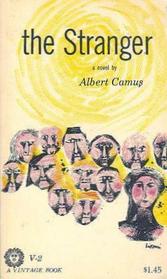
The Stranger By Albert Camus: A Deep Dive Into Existentialism And Absurdity
What makes a man commit a seemingly senseless crime, then show no remorse at his trial, and ultimately face execution with indifference? This is the central question that Albert Camus explores in The Stranger, his groundbreaking 1942 novel that has become a cornerstone of existentialist literature. But what is it about this slim volume that continues to captivate, disturb, and provoke readers nearly a century after its publication?
Biography of Albert Camus
Albert Camus was born on November 7, 1913, in Mondovi, French Algeria (now Dréan, Algeria). His family was of modest means—his mother was of Spanish descent and could not read or write, and his father, a poor agricultural worker, died in World War I when Albert was just one year old. These humble beginnings would profoundly shape Camus's worldview and literary voice.
Camus studied philosophy at the University of Algiers, where he developed his philosophical ideas about the absurd and human existence. His early career included work as a journalist for Alger Républicain, where he wrote articles about poverty and social injustice in Algeria.
| Personal Details | Information |
|---|---|
| Full Name | Albert Camus |
| Born | November 7, 1913 |
| Birthplace | Mondovi, French Algeria |
| Died | January 4, 1961 (aged 46) |
| Cause of Death | Car accident |
| Education | University of Algiers |
| Spouse(s) | Simone Hié (1934–1936), Francine Faure (1940–1960) |
| Children | Catherine Camus, Jean Camus |
| Notable Awards | Nobel Prize in Literature (1957) |
The Stranger: A Philosophical Masterpiece
The Stranger (L'Étranger in French) emerged from Camus's deep engagement with existentialist philosophy and his personal experiences in French Algeria. The novel follows Meursault, a French Algerian who commits murder and faces the consequences of his actions with an unsettling detachment that shocks those around him.
Camus's work arrived at a pivotal moment in literary history. Published in 1942 during World War II, The Stranger captured the growing sense of alienation and absurdity that characterized much of modern existence. The novel's protagonist, Meursault, embodies what Camus would later articulate as the absurd hero—someone who recognizes the fundamental meaninglessness of life yet chooses to live authentically within that framework.
The Plot and Main Characters
The narrative of The Stranger unfolds in two parts. In the first part, we meet Meursault, who learns of his mother's death at the beginning of the novel. His matter-of-fact response—"Maman died today. Or yesterday maybe, I don't know"—immediately establishes his emotional distance from conventional social expectations.
- Exclusive Leak The Yorkipoos Dark Secret That Breeders Dont Want You To Know
- Explosive Thunder Vs Pacers Footage Leaked Inside The Shocking Moments They Tried To Hide
- Al Pacino Young
Following in the footsteps of Luchino Visconti, François Ozon has delivered a new update on the classic Albert Camus novel The Stranger, delivering one of his most acclaimed films. The cast includes Benjamin Voisin, Rebecca Marder, Pierre Lottin, Denis Lavant, and Swann Arlaud, bringing fresh interpretation to this timeless story.
Meursault's life continues with unsettling normalcy. He attends his mother's funeral with apparent indifference, then returns to Algiers where he befriends Raymond Sintès, a neighbor involved in domestic violence. A trip to the beach with Raymond leads to a confrontation with Arab men, one of whom is the brother of Raymond's abused girlfriend. In the intense heat and blinding sunlight, Meursault shoots an Arab man five times, killing him.
The second part of the novel focuses on Meursault's imprisonment and trial. Here, the real crime seems to be not the murder itself but Meursault's failure to conform to social expectations—his lack of visible grief at his mother's funeral, his relationship with Marie the day after the burial, and his general emotional detachment. The prosecutor argues that Meursault is a monster who is "morally guilty of his mother's death" because he sent her to a nursing home.
Key Scenes and Philosophical Ideas
One of the most significant scenes occurs when Meursault shoots the Arab man. The heat, the glaring sun, and the reflective light off the Arab's knife create a sensory overload that pushes Meursault to act. This scene exemplifies Camus's concept of the absurd—the disconnect between human desires for meaning and the universe's cold indifference.
Philosopher and writer Albert Camus defined gangster morality as 'an inexhaustible round of triumph and revenge, defeat and resentment,' a concept that resonates throughout the novel's exploration of justice and social expectations.
Another pivotal moment comes during Meursault's trial, where he realizes that his conviction will be based not on the murder but on his character and his failure to play the expected social roles. This realization leads to one of the novel's most famous passages, where Meursault reflects on the absurdity of life and the inevitability of death.
The Absurd and Existentialism
At its core, The Stranger is an exploration of what Camus called the absurd—the tension between the human desire for meaning and purpose and the universe's cold indifference to such desires. Meursault's journey represents a confrontation with this absurdity, and his ultimate acceptance of it becomes a form of liberation.
Camus's philosophy differs from traditional existentialism in important ways. While he shared with existentialists like Sartre an interest in individual freedom and responsibility, Camus rejected the idea that existence precedes essence or that life has no inherent meaning. Instead, he argued that the recognition of life's absurdity should lead not to despair but to revolt—a conscious rebellion against meaninglessness through authentic living.
Meursault: The Anti-Hero of Modern Literature
Meursault remains one of literature's most controversial protagonists. His emotional detachment, his failure to conform to social expectations, and his ultimate acceptance of death have made him a figure of fascination for generations of readers.
The stranger (part 1, chapter 3) lyrics: "I had a busy morning in the office. My employer was in a good humor." These opening lines establish Meursault's character—a man who approaches life with a kind of detached practicality that others interpret as coldness or sociopathy.
What makes Meursault so compelling is his radical honesty. He refuses to lie about his feelings or to pretend to emotions he doesn't possess. In a society that demands certain performances of grief, love, and remorse, Meursault's authenticity becomes his greatest crime.
Cultural Impact and Adaptations
The masterpiece of Nobel Prize winner Albert Camus now in a striking American English translation, The Stranger remains vital for its unsettling insights into the impossibility of moral certainty in the face of violence.
The novel has inspired numerous adaptations across different media. In 1967, Luchino Visconti directed a film adaptation titled Lo straniero, starring Marcello Mastroianni as Meursault. Limited edition #1468 of 1500 signed by artist Daniel Maffia captures the novel's enduring visual appeal.
The book's influence extends beyond literature into philosophy, psychology, and popular culture. Its exploration of alienation, authenticity, and the absurd has resonated with readers facing their own existential questions in an increasingly complex world.
Why The Stranger Remains Relevant Today
"Matthew Ward has done Camus and us a great service. The Stranger is now a different and better novel for its American readers. It is now our classic as well as France's." This assessment of the novel's translation highlights how Camus's work continues to find new audiences and new meanings across cultural and temporal boundaries.
The novel's themes of alienation, the search for meaning, and the confrontation with mortality remain as relevant today as they were in 1942. In an age of increasing social fragmentation, where traditional sources of meaning and community are often questioned or rejected, Meursault's journey speaks to contemporary readers' own struggles with authenticity and belonging.
The Novel's Structure and Style
Camus's writing in The Stranger is characterized by its spare, precise prose. The first-person narrative creates an immediate intimacy with Meursault's perspective, while the deceptively simple language masks the novel's philosophical complexity.
The narrative structure mirrors Meursault's psychological journey—from the initial detachment and passivity to the growing awareness of his situation and finally to his acceptance of his fate. This structure creates a powerful emotional arc that culminates in the novel's famous final lines, where Meursault expresses his hope that his execution will be witnessed by a crowd of angry spectators—a final act of defiance and authenticity.
Camus's Other Works and Literary Legacy
In addition to his first novel, The Stranger, Camus published The Plague, The Fall, and philosophical essays including The Myth of Sisyphus and The Rebel. His work's rich influence on intellectual and artistic culture earned him a Nobel Prize in 1957, making him the second-youngest recipient of the literature prize at age 44.
Camus died in a car accident in 1961, cutting short a brilliant literary career. However, his work continues to be studied, debated, and admired for its philosophical depth and literary craftsmanship.
Understanding Meursault's Journey
With the two o'clock bus I should get there well before nightfall. Then I can spend the night there, keeping the usual vigil beside the body, and be back here by tomorrow evening. I have fixed up with my employer for two days' leave. Obviously, under the circumstances, he couldn't refuse.
These logistical details from the novel's opening reveal much about Meursault's character. Even in the face of his mother's death, he approaches the situation with the same practical mindset he would bring to any task. This emotional distance sets the tone for the entire novel and establishes the central tension between Meursault and the society that will eventually judge him.
The Novel's Opening and Its Significance
The stranger by French author and philosopher Albert Camus, published in 1942 as L'Étranger, is a seminal work that delves into the philosophy of existentialism and the absurdity of human existence. The novel's opening—with its famous ambiguity about when Meursault's mother actually died—immediately establishes the theme of uncertainty and the breakdown of conventional narrative expectations.
This opening also challenges readers to question their own assumptions about how people should behave in the face of death and tragedy. Meursault's practical approach to his mother's funeral—focusing on details like bus schedules and the need for sleep—subverts our expectations and forces us to confront our own preconceptions about grief and social performance.
Conclusion: The Enduring Power of The Stranger
Albert Camus's novel The Stranger follows the life of Meursault, a Frenchman living in Algeria whose apathetic responses to life get him in trouble socially and eventually result in his death. Published in 1942, The Stranger is Camus' most enduring literary achievement. It has baffled and troubled readers of all ages for decades as they try to contend with Meursault's approach to life, emotions, and consequences.
Whether you're approaching The Stranger for the first time or returning for a deeper analysis, this exploration will help you understand its enduring significance. The novel continues to challenge readers to examine their own assumptions about meaning, authenticity, and the human condition. In a world that often demands conformity and emotional performance, Meursault's radical honesty and acceptance of life's absurdity offer a powerful alternative perspective—one that continues to resonate nearly a century after the novel's initial publication.
The stranger's power lies not in providing answers but in asking uncomfortable questions about how we live, how we face death, and what it means to be truly authentic in a world that often demands we play roles we don't believe in. This is why, generation after generation, readers continue to discover and grapple with Meursault's story—because in his struggle to find meaning in an indifferent universe, we recognize our own.