The Twelve Tribes Of Israel: Biblical Origins, History, And Modern Understanding
Have you ever wondered about the origins of the twelve tribes of Israel and their significance in biblical history? These ancient Hebrew clans, descended from the patriarch Jacob, played a crucial role in the formation of Jewish identity and the establishment of the Promised Land. Their story spans from the Book of Genesis through the conquest of Canaan and continues to fascinate scholars and religious adherents alike. Let's explore the biblical narrative, historical context, and modern interpretations of these twelve tribes that shaped the destiny of a people.
The Biblical Origin and Genealogy of the Twelve Tribes
The story of the twelve tribes of Israel begins with Jacob, whose name was changed to Israel after he wrestled with an angel of the Lord (Genesis 32:28). Jacob, the son of Isaac and grandson of Abraham, had twelve sons through his two wives Leah and Rachel, and their handmaids Zilpah and Bilhah. These sons became the patriarchs of the twelve tribes:
- Reuben - Jacob's firstborn son with Leah
- Simeon - Son of Leah
- Levi - Son of Leah, from whom the priestly tribe descended
- Judah - Son of Leah, whose lineage would produce King David and ultimately Jesus
- Dan - Son of Bilhah, Rachel's handmaid
- Naphtali - Son of Bilhah
- Gad - Son of Zilpah, Leah's handmaid
- Asher - Son of Zilpah
- Issachar - Son of Leah
- Zebulun - Son of Leah
- Joseph - Son of Rachel, who received a double portion through his sons
- Benjamin - Youngest son of Rachel
Each tribe carried the name of its progenitor and maintained a distinct identity while being part of the larger Israelite community. The tribe of Joseph was unique in that it was represented by his two sons, Ephraim and Manasseh, who were adopted by Jacob as his own sons (Genesis 48:5-6).
The Tribes After Moses: Conquest of Canaan
Biblical tradition holds that after the death of Moses, the twelve tribes of Israel, under the leadership of Joshua, took possession of the Promised Land of Canaan. This was the fulfillment of God's promise to Abraham, Isaac, and Jacob that their descendants would inherit this land. The conquest, as described in the Book of Joshua, involved the tribes working together to overcome the Canaanite inhabitants and establish their presence in the region.
Each tribe, except for Levi, received a specific territorial allotment. The Levites, being the priestly tribe, were given cities throughout the territories of the other tribes rather than a contiguous land area. This arrangement reflected their special religious role within the community.
The Book of Judges describes a period when the tribes functioned more independently, united by common worship and occasional military cooperation rather than by a central government. This loose confederation eventually gave way to the united monarchy under Saul, David, and Solomon, with all tribes acknowledging a single king.
- Shocking Leak Canelos Secret Plan To End Crawfords Career You Wont Believe This
- Stuart Mad Tv Leak Secret Video Reveals His Darkest Secret
- Yuki Naras Shocking Leak Exposes Dark Secrets
Land Allotment and the Special Case of Levi
When the tribes inherited the Promised Land, there was a unique arrangement for the descendants of Levi. Unlike the other tribes, the Levites did not receive a specific territorial allotment. Instead, they were given forty-eight cities scattered throughout the territories of the other tribes (Numbers 35:1-8).
This arrangement had several implications:
- Religious Function: The Levites served as priests, teachers, and caretakers of the Tabernacle and later the Temple
- Economic Support: They depended on tithes and offerings from the other tribes for their livelihood
- Geographical Distribution: Their presence in various locations ensured religious instruction and cultic practices throughout the land
The tribe of Simeon was also treated differently, as its allotment was within the territory of Judah (Joshua 19:1-9), possibly due to its smaller size or other circumstances not explicitly stated in the biblical text.
Historical and Archaeological Evidence
Modern scholarship has approached the historicity of the twelve tribes with varying perspectives. While the biblical narrative presents the tribes as clearly defined and historically established entities, archaeological and historical evidence suggests a more complex picture.
Some scholars view the "twelve tribes" as an idealized genealogical construct rather than a precise historical reality. The number twelve appears to have symbolic significance in the ancient Near East, often representing completeness or totality. This symbolic use of twelve is seen in other contexts as well, such as the twelve months of the year or the twelve signs of the zodiac.
Archaeological evidence has not definitively confirmed the biblical account of a unified conquest of Canaan by the twelve tribes. Some researchers suggest that the emergence of Israel in Canaan was a more gradual process involving both military conquest and peaceful settlement among existing populations.
The Significance in God's Plan
The twelve tribes of Israel play a central role in the biblical narrative and in God's plan as understood by Jewish and Christian traditions. Several key aspects highlight their significance:
- Covenant Relationship: The tribes were the primary vehicle through which God established His covenant with the Hebrew people
- Messianic Lineage: The tribe of Judah was prophesied to produce the Messiah (Genesis 49:10)
- Priestly Function: The Levites served as mediators between God and the people
- Prophetic Fulfillment: Biblical prophecies often reference the twelve tribes in eschatological contexts
The New Testament continues to reference the twelve tribes, with Jesus selecting twelve apostles to symbolize the restoration and renewal of Israel (Matthew 19:28). The Book of Revelation describes the 144,000 sealed servants of God as 12,000 from each of the twelve tribes (Revelation 7:4-8).
The Lost Tribes and Modern Identity
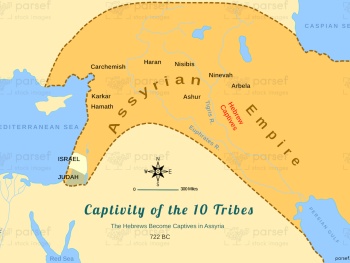
One of the most intriguing aspects of the twelve tribes narrative is the concept of the "Lost Tribes." After the Assyrian conquest of the northern kingdom of Israel in 722 BCE, many members of the ten northern tribes were deported, and their fate became a subject of mystery and speculation.
Various theories and traditions have emerged regarding the Lost Tribes:
- Assimilation Theory: Many scholars believe the deported populations were gradually assimilated into surrounding cultures
- Dispersal Theories: Some traditions suggest the tribes migrated to distant lands, with claims of their descendants found in various parts of the world
- Symbolic Interpretation: Some view the Lost Tribes as a metaphor for the Jewish diaspora
Modern genetic studies and historical research continue to investigate these claims, though definitive identification of specific populations as descendants of the Lost Tribes remains elusive.
Contemporary Relevance and Identity
The legacy of the twelve tribes continues to influence modern Jewish identity and religious practice. While the tribal affiliations are largely symbolic today, they still appear in various contexts:
- Religious Roles: Certain religious functions are still associated with specific tribes (e.g., Levites and Kohanim)
- Cultural Identity: Some Jewish families maintain traditions connected to their ancestral tribe
- Political Symbolism: The twelve tribes are sometimes invoked in discussions of Israeli land and national identity
In Christian theology, the twelve tribes often symbolize the universal scope of God's plan, with the Church sometimes described as the "twelve tribes" of the new covenant (James 1:1).
Conclusion
The twelve tribes of Israel represent a foundational element of biblical history and religious tradition. From their origin as the sons of Jacob to their role in the conquest of Canaan and beyond, these tribes shaped the identity of the Hebrew people and continue to fascinate scholars and believers today. While modern research may question certain historical details, the narrative of the twelve tribes remains a powerful symbol of unity, diversity, and divine purpose.
Whether viewed through the lens of faith, history, or cultural identity, the story of the twelve tribes offers profound insights into the development of religious traditions and the enduring human quest to understand our origins and purpose. As we continue to explore and interpret this ancient narrative, we gain not only historical knowledge but also a deeper appreciation for the complex tapestry of human civilization and spiritual heritage.