The Remarkable Legacy Of Amerigo Vespucci: Explorer, Cartographer, And Namesake
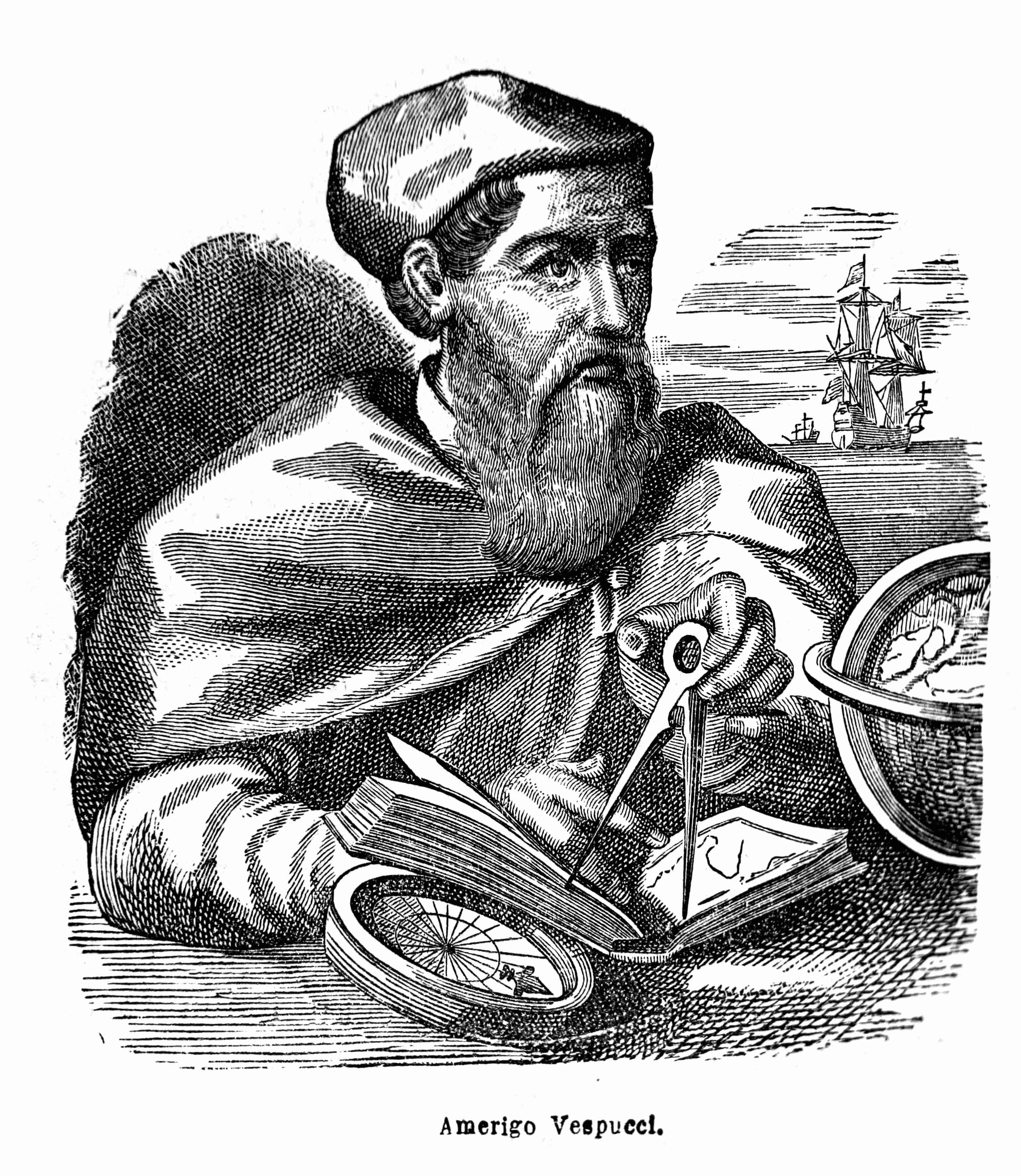
Amerigo Vespucci, an eminent figure of the Age of Exploration, is often overshadowed by his contemporaries like Christopher Columbus. However, his contributions to the exploration of the New World were pivotal, earning him the honor of having two continents named after him. As a skilled navigator, Vespucci's voyages provided valuable insights into the geography of the Americas, challenging the prevailing belief that the lands discovered by Columbus were part of Asia. This article delves into the life and legacy of Amerigo Vespucci, exploring his voyages, discoveries, and the impact he left on the world.
Vespucci's life was marked by curiosity and a relentless pursuit of knowledge. Born in Florence, Italy, he was influenced by the intellectual environment of the Renaissance. His background in commerce and navigation set the stage for his future endeavors in exploration. Unlike many of his contemporaries, Vespucci meticulously documented his voyages, providing maps and letters that offered a new understanding of the lands beyond the Atlantic Ocean. His writings were widely circulated, earning him a reputation as a credible and authoritative figure in the realm of exploration.
The name "America" is derived from Amerigo Vespucci, a testament to the profound impact he had on the world's understanding of geography. His identification of the New World as a separate continent was a groundbreaking revelation that reshaped the maps of his time. As we explore the life and achievements of Vespucci, we uncover the story of a man whose curiosity and intellect left an indelible mark on history. This article aims to provide an in-depth look at the life, voyages, and enduring legacy of Amerigo Vespucci, celebrating his contributions to exploration and the world at large.
Table of Contents
- Biography of Amerigo Vespucci
- Early Life and Education
- Career Before Exploration
- The Age of Exploration
- Vespucci's Voyages
- Discoveries and Maps
- America's Namesake
- Impact on Geography
- Vespucci's Legacy
- Personal Life and Character
- Influence on Future Explorers
- Controversies and Criticisms
- Vespucci in Popular Culture
- Frequently Asked Questions
- Conclusion
Biography of Amerigo Vespucci
Amerigo Vespucci was born on March 9, 1454, in Florence, Italy, a city known for its rich cultural and intellectual heritage during the Renaissance. His family was of noble origin, providing him with a privileged upbringing and access to education. Vespucci's early life in Florence was marked by exposure to the ideas and innovations of the Renaissance, which played a significant role in shaping his intellectual pursuits.
In his youth, Vespucci was educated by his uncle, Giorgio Antonio Vespucci, a Dominican friar and renowned scholar. This education emphasized the study of classical literature, astronomy, and geography, instilling in Vespucci a lifelong curiosity about the world. His early exposure to the works of Ptolemy and other ancient scholars sparked his interest in exploration and navigation.
Personal Details and Biodata
| Full Name | Amerigo Vespucci |
|---|---|
| Birth Date | March 9, 1454 |
| Birthplace | Florence, Italy |
| Nationality | Italian |
| Occupation | Explorer, Navigator, Cartographer |
| Known For | Voyages to the New World, Namesake of America |
| Died | February 22, 1512 |
Vespucci's fascination with exploration led him to pursue a career in commerce, where he gained valuable experience in navigation and the management of long-distance trade journeys. This experience proved invaluable when he later embarked on his voyages to the New World. Vespucci's ability to combine his knowledge of navigation with his natural curiosity about the world set him apart from many of his contemporaries.
- Gary Lockwoods Sex Scandal Leak How It Destroyed His Life
- Reagan Gomez Prestons Shocking Leak The Video That Destroyed Her Career
- Explosive Thunder Vs Pacers Footage Leaked Inside The Shocking Moments They Tried To Hide
Early Life and Education
Amerigo Vespucci's early life was deeply influenced by the intellectual and cultural environment of Florence. Born into a family of modest nobility, Vespucci was afforded the opportunity to receive a comprehensive education. His uncle, Giorgio Antonio Vespucci, played a pivotal role in his upbringing, ensuring that Amerigo was well-versed in classical studies and the emerging fields of science and geography.
Under the guidance of his uncle, Vespucci studied the works of ancient scholars, including the geography of Ptolemy and the astronomical theories of Claudius Ptolemy. This foundation in classical knowledge fueled Vespucci's interest in the physical world and the mysteries that lay beyond the known borders of Europe. His education also included the study of cartography, which would later prove crucial in his contributions to the field of exploration.
Vespucci's early exposure to the intellectual currents of the Renaissance instilled in him a sense of curiosity and a desire to understand the world in a broader context. This intellectual curiosity, combined with his family's connections, paved the way for Vespucci's future endeavors in exploration. As he grew older, Vespucci began to explore opportunities beyond Florence, seeking to apply his knowledge and skills in the burgeoning field of exploration.
Career Before Exploration
Before embarking on his famous voyages, Amerigo Vespucci built a successful career in commerce and navigation. In the late 15th century, Vespucci moved to Seville, Spain, where he was employed by the influential Medici family. In his role as a banker and merchant, Vespucci managed trade routes and facilitated the exchange of goods across the Mediterranean and beyond.
During his time in Seville, Vespucci developed a keen understanding of navigation and the logistics of long-distance trade. He was responsible for outfitting ships and ensuring that voyages were well-planned and executed. This experience sharpened his skills in navigation, a crucial aspect of his later expeditions to the New World.
Vespucci's work in commerce also connected him with prominent explorers and navigators of the time. Through these interactions, Vespucci gained insights into the challenges and opportunities of exploring uncharted territories. His interest in exploration grew, and he began to see the potential for discovery beyond the established trade routes.
The Age of Exploration
The Age of Exploration, spanning the late 15th to the early 17th century, was a period of unprecedented global exploration and discovery. Driven by the desire for wealth, power, and knowledge, European nations sought to expand their territories and influence by exploring new lands and establishing trade routes. This era was marked by the voyages of explorers like Christopher Columbus, Vasco da Gama, and Ferdinand Magellan, who ventured into unknown waters to chart new territories.
Amerigo Vespucci's entry into the world of exploration came at a time when the possibilities seemed endless. The discovery of the Americas by Columbus in 1492 had opened a new frontier for exploration, and Vespucci was eager to contribute to this exciting era. Unlike many of his peers, Vespucci approached exploration with a scientific mindset, seeking to understand the new lands and their geographical features.
The Age of Exploration was characterized by a spirit of adventure and a willingness to challenge conventional wisdom. Explorers like Vespucci played a crucial role in expanding the known world and providing new insights into geography, navigation, and the diversity of cultures. Vespucci's contributions to this era were significant, as he provided detailed accounts of his voyages and helped to map the new territories he encountered.
Vespucci's Voyages
Amerigo Vespucci embarked on several voyages to the New World, each contributing to the growing body of knowledge about the Americas. His expeditions were conducted under the auspices of both Spain and Portugal, two of the leading maritime powers of the time. Vespucci's voyages were characterized by meticulous documentation and a keen interest in the geographic and cultural aspects of the lands he explored.
Vespucci's first voyage, undertaken in 1497, remains a subject of historical debate. While some accounts suggest that he sailed along the eastern coast of South America, others question the authenticity of this expedition. Regardless, Vespucci's subsequent voyages are well-documented and provide valuable insights into the geography of the New World.
During his second voyage in 1499, Vespucci sailed along the coast of present-day Brazil. It was on this journey that he began to suspect that the lands discovered by Columbus were not part of Asia, but rather an entirely new continent. Vespucci's observations and calculations led him to conclude that the New World was distinct from the Asian continent, a groundbreaking revelation at the time.
Vespucci's third voyage, conducted in 1501, further solidified his theories about the New World. Sailing under the Portuguese flag, he explored the eastern coast of South America and compiled detailed maps and descriptions of the region. His writings from this voyage were widely circulated in Europe, providing a new understanding of the geography of the Americas.
Discoveries and Maps
Amerigo Vespucci's contributions to the field of cartography were instrumental in shaping the European understanding of the New World. His meticulous documentation of his voyages and the maps he created provided a new perspective on the lands across the Atlantic. Vespucci's maps were among the first to depict the Americas as a separate continent, challenging the prevailing belief that these lands were part of Asia.
Vespucci's maps and letters, known as the "Mundus Novus" (New World), were published and circulated widely in Europe. These documents detailed the geography, flora, and fauna of the New World, offering a glimpse into the diverse landscapes and cultures that Vespucci encountered. His descriptions of the lands he explored were vivid and engaging, capturing the imagination of his contemporaries.
One of Vespucci's most significant contributions to cartography was his identification of the New World as a separate continent. His observations and calculations led him to conclude that the lands discovered by Columbus were not part of Asia, but rather a new continent altogether. This revelation had a profound impact on the field of geography and reshaped the maps of the world.
America's Namesake
The name "America" is a lasting tribute to Amerigo Vespucci's contributions to the exploration of the New World. The decision to name the continent after Vespucci was made by the German cartographer Martin Waldseemüller, who published a world map in 1507 that depicted the newly discovered lands as "America" in honor of Vespucci's discoveries.
Waldseemüller's map was the first to use the name "America" to refer to the continent, and it quickly gained acceptance among scholars and cartographers of the time. The decision to name the continent after Vespucci was based on the widespread recognition of his writings and maps, which provided a new understanding of the geography of the New World.
Vespucci's identification of the New World as a separate continent was a groundbreaking revelation, and the naming of the continent in his honor was a testament to the impact of his discoveries. The name "America" has endured through the centuries, serving as a lasting reminder of Vespucci's contributions to the field of exploration and cartography.
Impact on Geography
Amerigo Vespucci's contributions to geography were transformative, challenging the established beliefs of his time and reshaping the understanding of the world. His identification of the New World as a separate continent was a pivotal moment in the history of geography, providing a new framework for understanding the lands across the Atlantic.
Vespucci's meticulous documentation of his voyages and the maps he created provided valuable insights into the geography of the Americas. His observations of the diverse landscapes, flora, and fauna he encountered offered a new perspective on the natural world and the potential for exploration and discovery.
Through his writings and maps, Vespucci played a crucial role in expanding the European understanding of geography. His contributions to the field were widely recognized and celebrated, cementing his legacy as one of the most influential explorers of the Age of Exploration.
Vespucci's Legacy
Amerigo Vespucci's legacy is one of exploration, discovery, and a profound impact on the field of geography. His voyages to the New World challenged the prevailing beliefs of his time and provided a new understanding of the lands across the Atlantic. Vespucci's meticulous documentation of his journeys and the maps he created were instrumental in shaping the European understanding of the Americas.
The naming of the continent "America" in his honor is a testament to the lasting impact of his contributions. Vespucci's identification of the New World as a separate continent was a groundbreaking revelation that reshaped the maps of the world and provided a new framework for understanding geography.
Vespucci's legacy extends beyond his contributions to exploration and cartography. His curiosity, intellect, and dedication to understanding the world have inspired generations of explorers and scholars. Vespucci's life and achievements continue to be celebrated as a testament to the power of exploration and the pursuit of knowledge.
Personal Life and Character
While Amerigo Vespucci is best known for his contributions to exploration, his personal life and character provide valuable insights into the man behind the voyages. Vespucci was described by contemporaries as a man of intellect, curiosity, and a strong sense of purpose. His dedication to understanding the world was evident in his meticulous documentation of his journeys and his commitment to sharing his findings with others.
Vespucci's personal life was marked by a passion for learning and a desire to explore the unknown. He was deeply influenced by the intellectual environment of the Renaissance, which fostered his curiosity and encouraged him to pursue a career in exploration. Vespucci's character was characterized by a willingness to challenge conventional wisdom and a determination to uncover the truths of the natural world.
Despite the challenges and dangers of exploration, Vespucci remained committed to his pursuits, driven by a sense of adventure and a desire to contribute to the understanding of the world. His character and dedication to exploration have left a lasting legacy, inspiring future generations to continue the quest for knowledge and discovery.
Influence on Future Explorers
Amerigo Vespucci's contributions to exploration and geography had a profound influence on future explorers and the field of exploration as a whole. His meticulous documentation of his voyages and the maps he created provided valuable insights and a new understanding of the New World, inspiring subsequent generations of explorers to continue the quest for discovery.
Vespucci's identification of the New World as a separate continent challenged the prevailing beliefs of his time and provided a new framework for understanding geography. His contributions to cartography and navigation set a new standard for exploration, influencing the methods and approaches of future explorers.
Vespucci's legacy as an explorer and cartographer continues to inspire those who seek to understand the world and its mysteries. His dedication to exploration and the pursuit of knowledge serves as a reminder of the power of curiosity and the importance of pushing the boundaries of what is known.
Controversies and Criticisms
Despite his significant contributions to exploration and geography, Amerigo Vespucci's legacy has not been without controversy and criticism. Some historians have questioned the authenticity of certain aspects of his voyages, particularly his first expedition in 1497, which remains a subject of debate.
Critics have also raised questions about the extent of Vespucci's contributions compared to other explorers of his time. Some argue that his achievements have been overshadowed by the accomplishments of figures like Christopher Columbus, leading to a reevaluation of Vespucci's place in the history of exploration.
Despite these controversies, Vespucci's impact on the field of exploration remains significant. His identification of the New World as a separate continent and his contributions to cartography have had a lasting influence on the understanding of geography and the history of exploration.
Vespucci in Popular Culture
Amerigo Vespucci's legacy has extended beyond the realm of exploration and into popular culture. His name and achievements have been celebrated in various forms of media, including literature, art, and film. Vespucci's story has captured the imagination of people around the world, serving as a symbol of exploration and discovery.
In literature, Vespucci's voyages and contributions to geography have been the subject of numerous books and essays, exploring his life and the impact of his discoveries. His legacy has also been depicted in art, with portraits and illustrations capturing the spirit of his adventurous pursuits.
Vespucci's influence can also be seen in modern media, with films and documentaries highlighting his contributions to the Age of Exploration. His story continues to inspire those who seek to understand the world and its mysteries, serving as a reminder of the power of curiosity and the importance of exploration.
Frequently Asked Questions
1. What was Amerigo Vespucci known for?
Amerigo Vespucci was known for his voyages to the New World, his identification of the Americas as a separate continent, and his contributions to the field of cartography. His discoveries challenged the prevailing beliefs of his time and provided a new understanding of geography.
2. Why is America named after Amerigo Vespucci?
America is named after Amerigo Vespucci in recognition of his contributions to the exploration of the New World. The name was popularized by the German cartographer Martin Waldseemüller, who used the name "America" on his 1507 world map in honor of Vespucci's discoveries.
3. How did Amerigo Vespucci's voyages differ from those of Christopher Columbus?
While both Amerigo Vespucci and Christopher Columbus explored the New World, Vespucci's voyages were characterized by a focus on scientific observation and documentation. Vespucci's identification of the Americas as a separate continent was a significant departure from Columbus's belief that he had reached Asia.
4. What were some of the controversies surrounding Amerigo Vespucci's voyages?
One of the main controversies surrounding Amerigo Vespucci's voyages is the authenticity of his first expedition in 1497. Some historians question whether this voyage actually took place. Additionally, there has been debate over the extent of Vespucci's contributions compared to other explorers of his time.
5. What impact did Amerigo Vespucci have on geography?
Amerigo Vespucci's impact on geography was significant, as he identified the New World as a separate continent and provided valuable insights into its geography. His contributions to cartography and navigation helped reshape the maps of his time and provided a new framework for understanding the world.
6. How is Amerigo Vespucci remembered today?
Amerigo Vespucci is remembered as one of the most influential explorers of the Age of Exploration. His contributions to geography and cartography continue to be celebrated, and the naming of the continent "America" in his honor serves as a lasting tribute to his legacy.
Conclusion
Amerigo Vespucci's legacy as an explorer, cartographer, and namesake of the Americas is a testament to his contributions to the Age of Exploration. His identification of the New World as a separate continent challenged the prevailing beliefs of his time and provided a new understanding of geography. Through his meticulous documentation of his voyages and the maps he created, Vespucci played a crucial role in expanding the European understanding of the world.
Despite the controversies and criticisms surrounding certain aspects of his life and achievements, Vespucci's impact on the field of exploration remains significant. His dedication to the pursuit of knowledge and his willingness to challenge conventional wisdom have inspired generations of explorers and scholars. Vespucci's legacy continues to be celebrated as a symbol of curiosity, discovery, and the enduring quest for understanding the world and its mysteries.
As we reflect on the life and achievements of Amerigo Vespucci, we are reminded of the power of exploration and the importance of pushing the boundaries of what is known. His story serves as a reminder that the pursuit of knowledge and the spirit of adventure are timeless endeavors that continue to shape the world we live in today.